
City diplomacy

City diplomacy in 2026: from recognition to delivery
Evolution of city diplomacy priorities (2023–2026)
European mayors are becoming ever more active in international affairs, working with the EU and national institutions, while strengthening ties with other cities and networks. To learn about this fast-developing work, we compared our survey findings this year to those submitted by mayors in 2023.
In 2026, cities’ logic remains the same as 2023: to solve local problems, city leaders must build coalitions with other levels of government.
What is new is where this effort is concentrated. With climate change, geopolitical instability and attacks on Europe’s democratic values placing increasing strain on public governance, city diplomacy is becoming more focused and more strategic. In 2026, cities are moving from broad recognition to practical influence, as mayors regard the EU as a key arena where their priorities turn into programmes, funding and standards that work across borders.

City diplomacy priorities in 2026
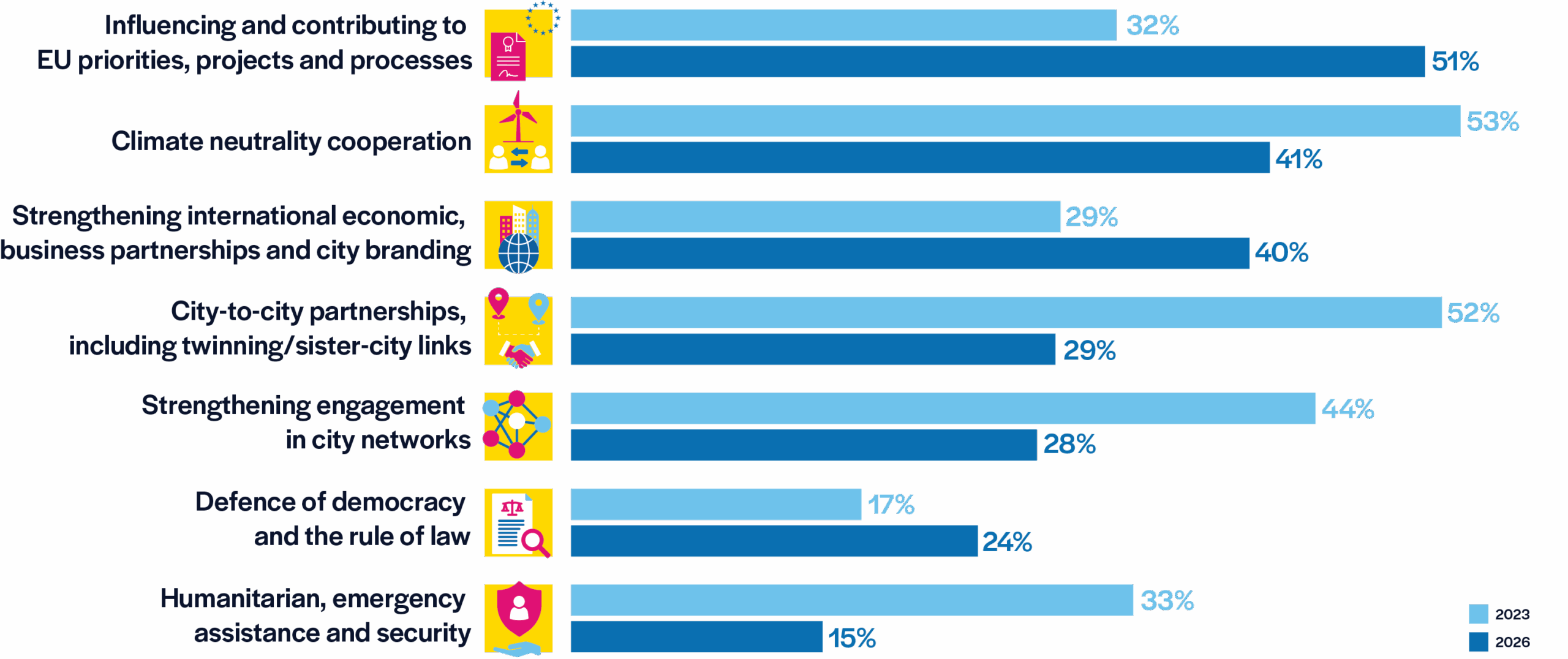
EU influence has become the leading focus of city diplomacy. In 2026, 51% of cities selected influencing and contributing to EU priorities, projects and processes as a key area of international action, up from 32% in 2023, when it ranked sixth. As the world becomes more fragmented and unstable, the EU remains a space where governments work together, and where cities can turn their ideas into concrete projects through funding, rules and programmes. The shift is also driven by content. The EU is putting topics that are critical to cities on its agenda. Housing, the new EU Policy Agenda for Cities, and the next EU budget, are all files where city diplomacy can shape both design and delivery. Cooperation on climate neutrality remains a major diplomatic track, although it is less dominant than in previous years.
Working with other cities to promote the climate transition ranks second in 2026, selected by 41% of cities, compared with 53% in 2023, when it held the top spot. Cities remain strongly committed to climate action. They continue to work together on solutions, defend its place on the EU agenda and push for the tools needed to turn ambition into local investment and implementation.
Economic and business diplomacy has climbed from joint sixth to the top three priorities since 2023. International economic and business partnerships, including city branding, were selected by 40% of cities in 2026, up from 29% in 2023. In a tougher geopolitical and fiscal context, mayors are proactively driving investment, building supply chains and attracting talent. This creates an opportunity for the EU: as Europe reshapes its economic and trade diplomacy, cities can help turn high-level agreements into projects, jobs and place-based investment.
What stabilised, and what fell back
Beyond the top three, the picture is more nuanced. City network engagement remains important but has eased, falling from third place in 2023 (44%) to fourth (28%) in 2026. Many cities are focusing on the partnerships they have built in recent years and using them more strategically to influence EU policy, climate action and deliver their priorities, especially as resources become tighter.
City-to-city partnerships, including twinning, have fallen more sharply, from second place in 2023 (52%) to fifth in 2026 (29%). Tighter budgets and a more complex international context are making bilateral cooperation harder, even if some partnerships still matter.
Cities are also putting more emphasis on defending democracy and the rule of law, rising to 24% in 2026, from 17% in 2023. This reflects the growing pressure cities face in their own communities, from polarisation to democratic backsliding. By contrast, humanitarian, emergency and security cooperation has receded to 15%, down from 33%, suggesting that cities are moving away from the first wave of emergency support and focusing more on longer-term cooperation through the EU.
City diplomacy in 2026: from recognition to delivery
Evolution of city diplomacy priorities (2023–2026)
European mayors are becoming ever more active in international affairs, working with the EU and national institutions, while strengthening ties with other cities and networks. To learn about this fast-developing work, we compared our survey findings this year to those submitted by mayors in 2023.
In 2026, cities’ logic remains the same as 2023: to solve local problems, city leaders must build coalitions with other levels of government.
What is new is where this effort is concentrated. With climate change, geopolitical instability and attacks on Europe’s democratic values placing increasing strain on public governance, city diplomacy is becoming more focused and more strategic. In 2026, cities are moving from broad recognition to practical influence, as mayors regard the EU as a key arena where their priorities turn into programmes, funding and standards that work across borders.
City diplomacy priorities in 2026
EU influence has become the leading focus of city diplomacy. In 2026, 51% of cities selected influencing and contributing to EU priorities, projects and processes as a key area of international action, up from 32% in 2023, when it ranked sixth. As the world becomes more fragmented and unstable, the EU remains a space where governments work together, and where cities can turn their ideas into concrete projects through funding, rules and programmes. The shift is also driven by content. The EU is putting topics that are critical to cities on its agenda. Housing, the new EU Policy Agenda for Cities, and the next EU budget, are all files where city diplomacy can shape both design and delivery. Cooperation on climate neutrality remains a major diplomatic track, although it is less dominant than in previous years.
Working with other cities to promote the climate transition ranks second in 2026, selected by 41% of cities, compared with 53% in 2023, when it held the top spot. Cities remain strongly committed to climate action. They continue to work together on solutions, defend its place on the EU agenda and push for the tools needed to turn ambition into local investment and implementation.
Economic and business diplomacy has climbed from joint sixth to the top three priorities since 2023. International economic and business partnerships, including city branding, were selected by 40% of cities in 2026, up from 29% in 2023. In a tougher geopolitical and fiscal context, mayors are proactively driving investment, building supply chains and attracting talent. This creates an opportunity for the EU: as Europe reshapes its economic and trade diplomacy, cities can help turn high-level agreements into projects, jobs and place-based investment.
What stabilised, and what fell back
Beyond the top three, the picture is more nuanced. City network engagement remains important but has eased, falling from third place in 2023 (44%) to fourth (28%) in 2026. Many cities are focusing on the partnerships they have built in recent years and using them more strategically to influence EU policy, climate action and deliver their priorities, especially as resources become tighter.
City-to-city partnerships, including twinning, have fallen more sharply, from second place in 2023 (52%) to fifth in 2026 (29%). Tighter budgets and a more complex international context are making bilateral cooperation harder, even if some partnerships still matter.
Cities are also putting more emphasis on defending democracy and the rule of law, rising to 24% in 2026, from 17% in 2023. This reflects the growing pressure cities face in their own communities, from polarisation to democratic backsliding. By contrast, humanitarian, emergency and security cooperation has receded to 15%, down from 33%, suggesting that cities are moving away from the first wave of emergency support and focusing more on longer-term cooperation through the EU.
A regional reading
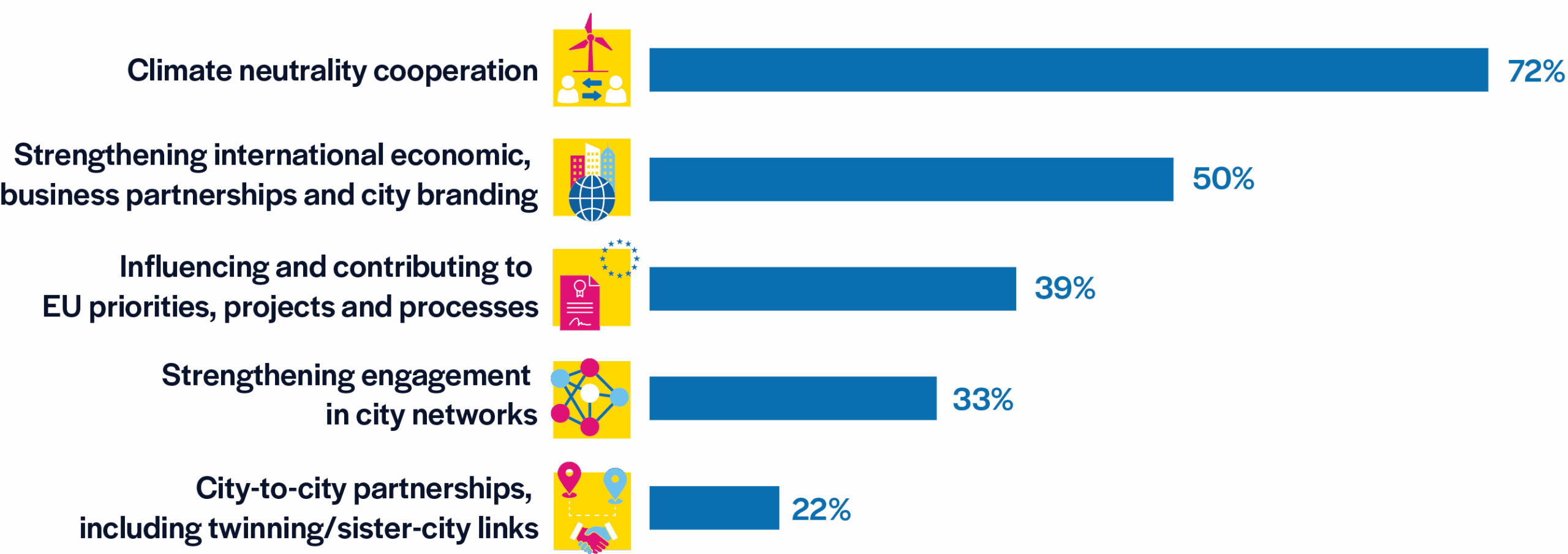
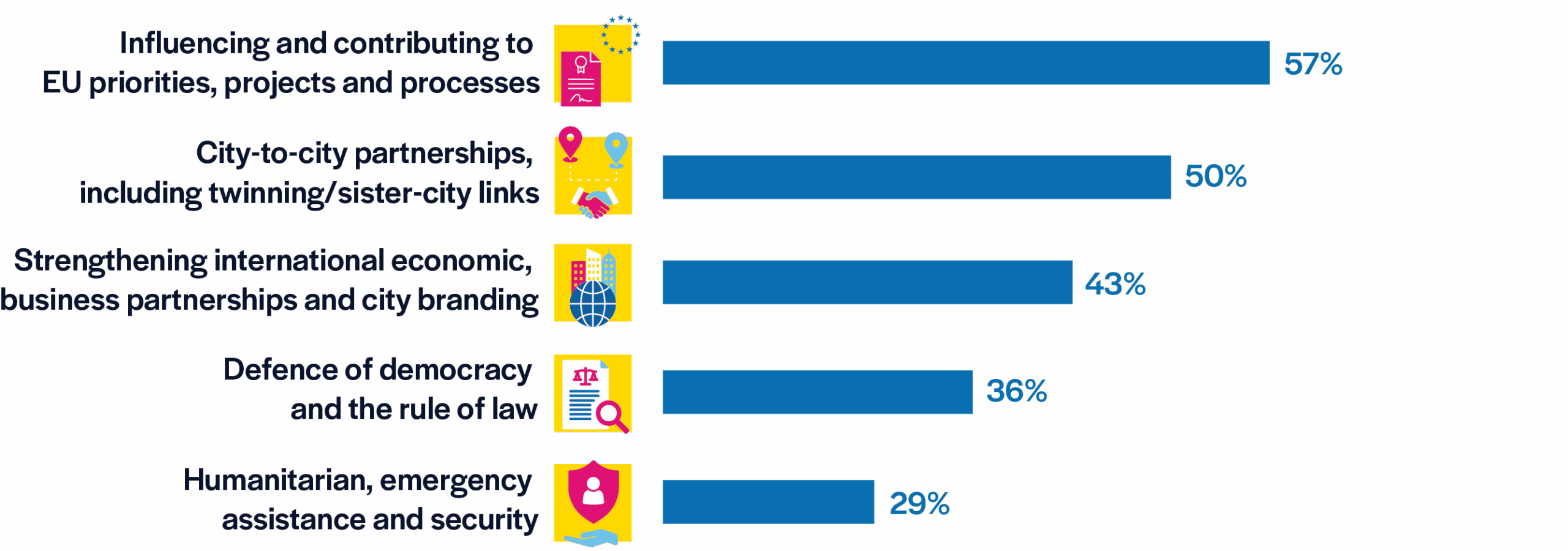
Northern cities put climate implementation first by a clear margin. Cities are taking a practical approach, working together to share models, adapt successful projects and develop common standards. Economic and business diplomacy ranks second, pointing to a stronger push for investment and talent, while EU influence remains an important channel for rolling out what works locally.
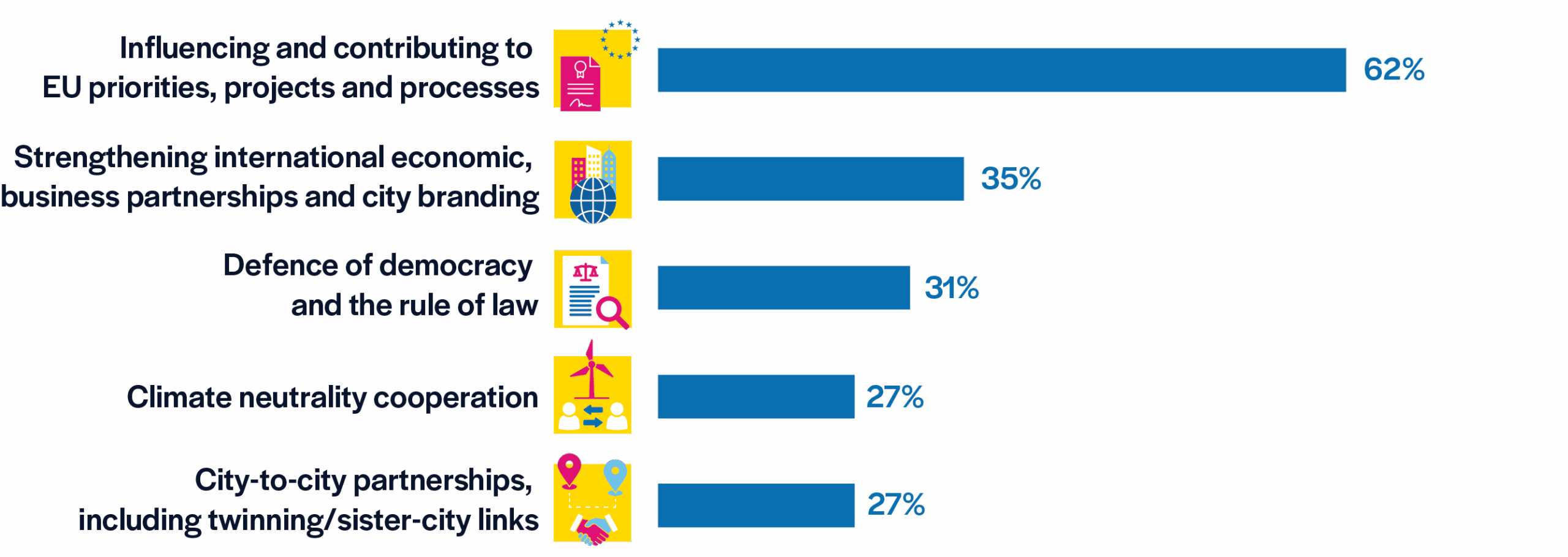
Western cities place EU influence at the top. For them, EU policy files, from the Urban Agenda and the EU budget to sectoral policies, are the strongest lever for delivery. Economic diplomacy also ranks highly, showing that cities are focusing more on attracting investment, creating jobs and supporting local businesses. The fact that democracy and the rule of law are in the top three also shows that cities are prioritising strong, stable communities and see this as the basis for everything else they do.
City diplomacy priorities in 2026, by region
Southern cities sit between EU delivery and climate implementation. Their priorities show a strong focus on using EU funding and policies to deliver projects, while continuing to work with other cities on climate action. Economic partnerships follow closely behind, underlining the importance of investment, jobs and local growth.
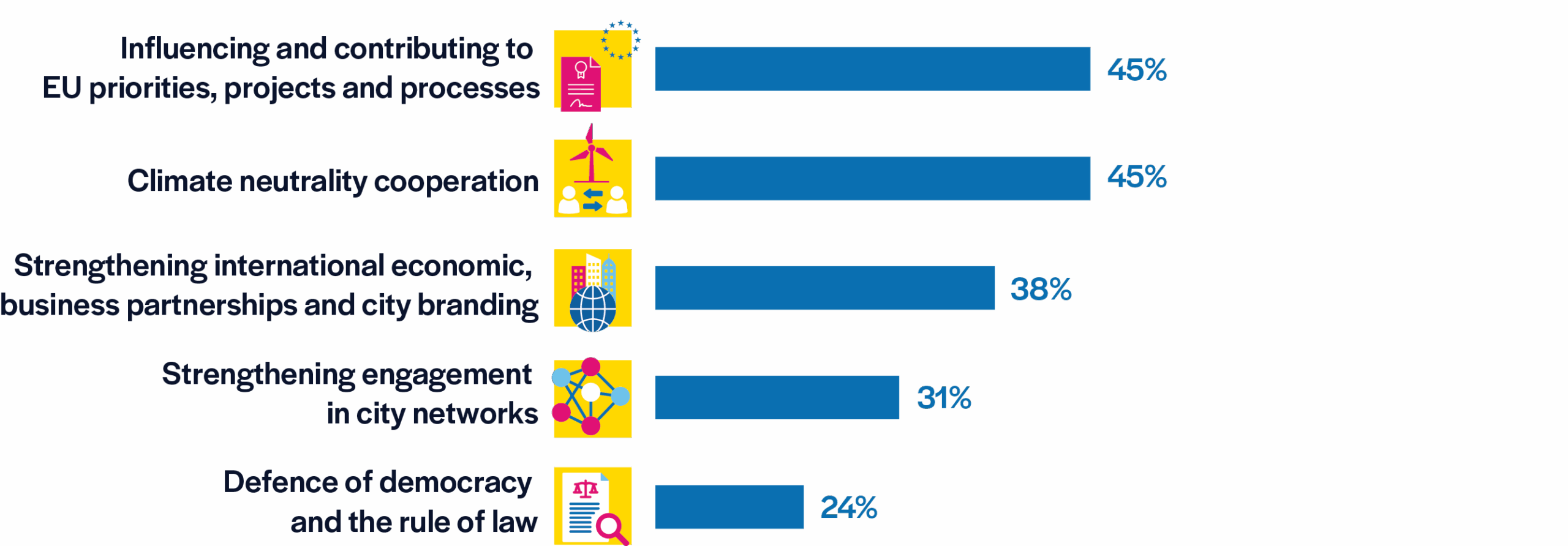
Central and Eastern European cities strongly prioritise EU influence. They need more predictable funding and a stronger role in shaping EU policies to better match local realities. At the same time, twinning and city partnerships still matter, as cities continue to rely on direct cooperation with each other. Economic diplomacy is also rising, as local governments compete for investment, talent and new supply chain opportunities.
Northen Europe
Western Europe
Southern Europe
Eastern Europe
A regional reading
Northern cities put climate implementation first by a clear margin. Cities are taking a practical approach, working together to share models, adapt successful projects and develop common standards. Economic and business diplomacy ranks second, pointing to a stronger push for investment and talent, while EU influence remains an important channel for rolling out what works locally.
Western cities place EU influence at the top. For them, EU policy files, from the Urban Agenda and the EU budget to sectoral policies, are the strongest lever for delivery. Economic diplomacy also ranks highly, showing that cities are focusing more on attracting investment, creating jobs and supporting local businesses. The fact that democracy and the rule of law are in the top three also shows that cities are prioritising strong, stable communities and see this as the basis for everything else they do.
Southern cities sit between EU delivery and climate implementation. Their priorities show a strong focus on using EU funding and policies to deliver projects, while continuing to work with other cities on climate action. Economic partnerships follow closely behind, underlining the importance of investment, jobs and local growth.
Central and Eastern European cities strongly prioritise EU influence. They need more predictable funding and a stronger role in shaping EU policies to better match local realities. At the same time, twinning and city partnerships still matter, as cities continue to rely on direct cooperation with each other. Economic diplomacy is also rising, as local governments compete for investment, talent and new supply chain opportunities.
City diplomacy priorities in 2026, by region
Northen Europe
Southern Europe
Western Europe
Eastern Europe
European cities in a rapidly evolving geopolitical context
As geopolitical tensions grow, the EU finds itself in a shifting global landscape in which long-standing underlying norms and institutions are increasingly questioned. National interests, inter-state conflicts and overlapping crises are undermining interdependencies and pooled sovereignty at the centre of the EU, while eroding the foundations of peace and international cooperation to which the European project is firmly committed. Against this backdrop, the EU needs to rethink its role as a geopolitical actor.
by Pol Morillas
Director of CIDOB (Barcelona Centre for International Affairs)
To strengthen its external action, the EU should deepen its internal integration, harnessing the many advances brought about by the Union since its inception, while promoting the necessary reforms to keep the EU fit for a rapidly changing world. This is a pressing task to counter rising voices within the Union that call for a weakened supranational governance structure and the devolution of political authority and decision-making power to national governments.
Cities are essential partners in strengthening European integration. As home to over 75% of the EU’s population, European cities experience on a daily basis the impact of policy decisions adopted at higher levels of government, as well as the effects of major global and regional developments. At the same time, within a multilevel governance system that is unparalleled across the world, European cities are at the core of the European project. European cities and regions currently implement 70% of all EU legislation.
It is not surprising that the priorities identified by close to 100 European mayors in the Eurocities Pulse Mayors Survey 2026 point to policy areas that cannot be addressed by national governments alone. For the fourth year in a row, the top priority for surveyed mayors is climate change, a challenge whose scale and complexity exceed the capacity of any single country to address. As highlighted in the CIDOB monograph Urban Climate Resilience in Europe, a joint research project by CIDOB and Eurocities, cities require a comprehensive resilience agenda, based on close coordination between local, national and EU levels, to address increasing climate risks in the region. The monograph contributes to discussions on the EU Climate Resilience Framework, to be adopted by the end of 2026, by providing expert analysis on the challenges of climate adaptation in European cities.
Furthermore, marking Eurocities’ 40th anniversary, the 2026 edition of the survey pays special attention to the relevance of geopolitics and city diplomacy. The surveyed mayors identify a clear hierarchy of existential risks to the EU, which are first felt in cities and translate directly into municipal operations and budgets. Geopolitical shocks and war, alongside rule-of-law backsliding, rank among the top existential risks. The mayors describe a landscape in which geopolitical tensions stem from national interests but are acutely felt at the local level. They also highlight the pressure that local governments experience domestically when illiberal trends weaken the separation of powers.
The survey further examines city diplomacy carried out by Eurocities mayors, with efforts focused on areas ranging from influencing EU priorities to cooperation on climate neutrality and economic development. These actions have effects that go well beyond the local scale. In an increasingly multipolar world order, where the conventional multilateral system is being overtaken by rapid geopolitical change, the EU can rely on its cities as committed partners in maintaining international cooperation, as demonstrated by their long-standing and expanding experience in city diplomacy.
The Eurocities Pulse Mayors Survey 2026 provides an essential overview of the core priorities and challenges facing European mayors. Equally important, it stands as a testament to the commitment and potential of cities in building a strong, forward-looking Europe. With proper support to address existing gaps, from human and technical capacity to predictable long-term financing and enabling regulatory conditions, cities can play a decisive role in strengthening European integration. A geopolitical Europe, one that is stronger than the sum of its Member States, also has in its cities a close and reliable ally.
by Pol Morillas
Director of CIDOB (Barcelona Centre for International Affairs)
Cities are finding their own voice on international issues
Traditionally, diplomacy has been the prerogative of national governments, with cities expected to operate within national frameworks, particularly on sensitive international issues. Even globally, engaged cities have often relied on indirect channels to express their positions. This is now evolving. As global challenges increasingly play out at local level, cities are asserting a more autonomous voice in international affairs, while still operating within political and legal constraints. This shift does not come without friction, but it marks a gradual rebalancing of roles in multilevel governance.
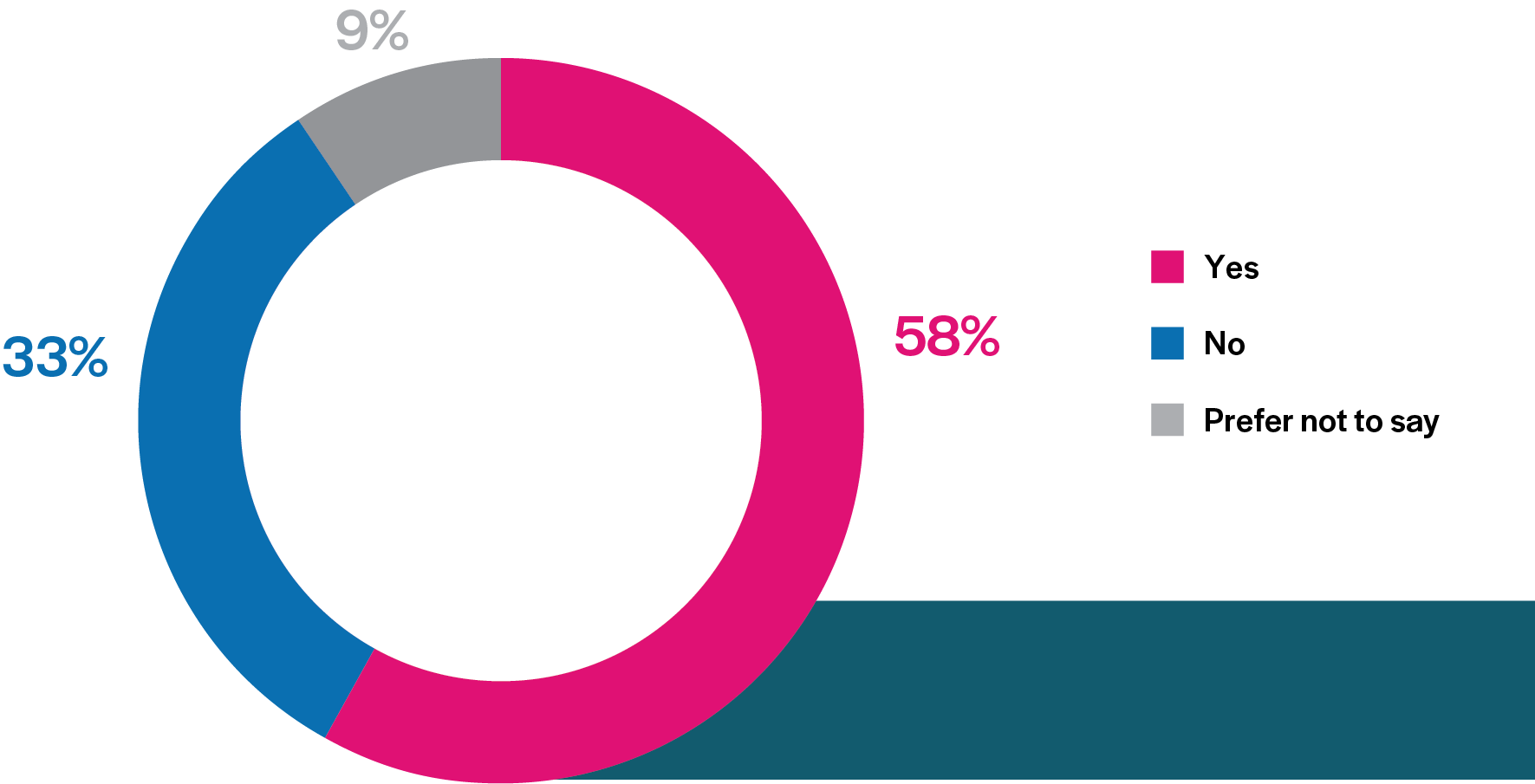
A clear majority (58%) of cities say they take public positions on international issues that may differ from their national governments. Many mayors now consider this as part of their job. Cities are stepping up as political actors and using their voice.
How they do this varies. Some mayors take a proactive lead by issuing their own statements. Others speak through coalitions, city networks or joint letters. Some reserve public positions for specific moments, especially on democratic values, rights or major crises. At the same time, many cities remain aligned with national positions, work through closed coordination channels, or point to legal and political limits on their mandate. City diplomacy is not limited to speaking out. It is also about knowing when and how to influence from within.
Key areas of divergence between cities and national governments internationally
Where and why cities differ
Overall, three main areas stand out where cities take a different approach from national governments, showing how local priorities shape their positions.
First, human rights, democracy and the rule of law. Several cities adopted stronger positions on Gaza. They called for a ceasefire, humanitarian access or recognition of statehood where national positions were more cautious. Cities including Terrassa, Ghent, Groningen, Hanover, Dusseldorf and Athens argued that respecting humanitarian law matters locally, because it affects social cohesion, community safety and solidarity. Others spoke out on domestic issues where they saw democratic norms under pressure, from Budapest’s efforts to protect its decision-making powers from national government control to Genoa’s support for rainbow families and LGBTQ+ rights. Across these examples, cities consistently defend the rules and rights that underpin local democracy.

Cities taking public positions that differ from national government internationally
When cities speak up: rights first, climate and inclusion close behind
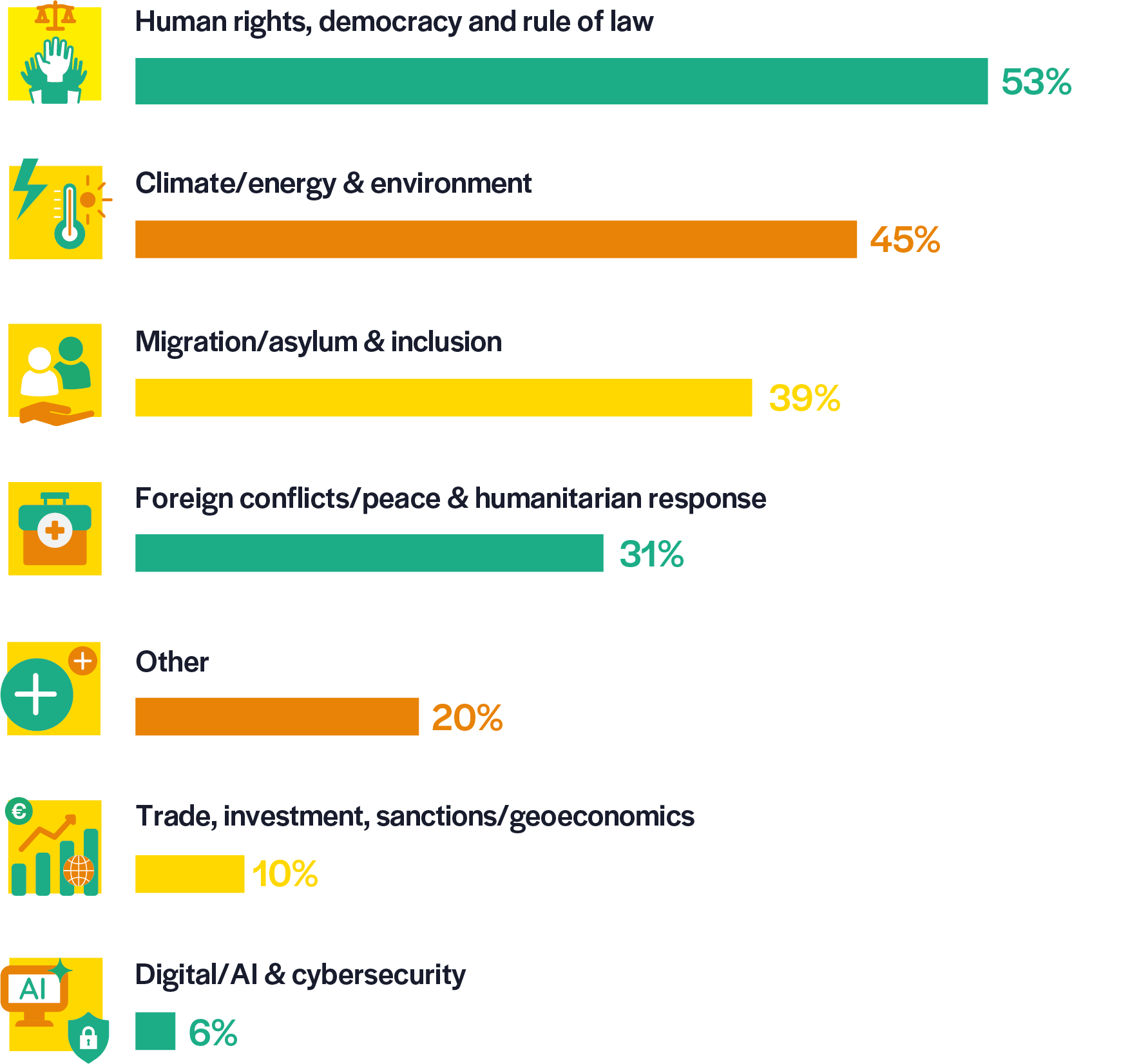
When cities do speak out, values come first. Among the cities that take independent public positions, the most common topics are human rights, democracy and the rule of law, cited by 53%. These are followed by climate, energy and environment (45%), migration, asylum and inclusion (39%), and foreign conflicts, peace and humanitarian response (31%).
The order matters. As global politics becomes more driven by short-term interests, mayors focus on their values such as cleaner air, inclusive services, open civic space, and protection for people affected by war and displacement. This is reflected in the challenges they tackle every day: decarbonising buildings and transport, welcoming and integrating newcomers, protecting civic space, supporting community cohesion and defending fundamental rights in public institutions. Cities are not trying to replace national foreign policy. They are speaking about their neighbourhoods and local communities because it’s where global challenges are felt first.
Cities that speak out do not all do so in the same way. Some lead with their own political voice; others act through coalitions or speak only when a crisis demands it. Even when cities stay aligned with national positions, they are not necessarily silent. Some choose alignment to stay involved in decision-making processes, some face mandate constraints, and others work quietly through associations or institutional channels. Whatever their approach, they all aim to shape decisions that have a direct impact on their cities and the people who live in them.

Second, climate, energy and environmental protection. Cities pushed for stronger climate action or resisted national decisions they saw as damaging to local climate goals. Malmo challenged changes to Sweden’s low-carbon fuel standard, Istanbul opposed the environmental impact of the Canal Istanbul project, Turku backed the Nature Restoration Regulation. In this area, cities defend a long-term approach, protecting ecosystems and public health while working towards climate neutrality based on local evidence.
Third, migration, asylum and inclusion. Where national debates often focus on control, quotas or short-term pressures, cities emphasised integration as a public good. They are moving in the same direction, with initiatives such as Bristol’s ‘city of sanctuary’, Utrecht’s call for fair distribution of reception places, Zagreb’s one-stop integration infrastructure and Vantaa’s commitment to helping migrants thrive. These are practical choices to build inclusive services and keep communities together.
Cities take a similar approach across other topics, linking their positions to concrete local priorities. On EU governance and the next seven-year EU budget, cities such as Toulouse and Ghent call for funding that better fits local realities. Regarding central-local finance and mandates, city like Amiens highlight the gap between their responsibilities and the resources they receive. On housing, Madrid points to the need for stronger measures to keep homes affordable.
Across these issues, mayors’s voices express clear values combined with practical solutions, grounded in the systems and services that keep cities running.
Cities are finding their own voice on international issues
Traditionally, diplomacy has been the prerogative of national governments, with cities expected to operate within national frameworks, particularly on sensitive international issues. Even globally, engaged cities have often relied on indirect channels to express their positions. This is now evolving. As global challenges increasingly play out at local level, cities are asserting a more autonomous voice in international affairs, while still operating within political and legal constraints. This shift does not come without friction, but it marks a gradual rebalancing of roles in multilevel governance.
A clear majority (58%) of cities say they take public positions on international issues that may differ from their national governments. Many mayors now consider this as part of their job. Cities are stepping up as political actors and using their voice.
How they do this varies. Some mayors take a proactive lead by issuing their own statements. Others speak through coalitions, city networks or joint letters. Some reserve public positions for specific moments, especially on democratic values, rights or major crises. At the same time, many cities remain aligned with national positions, work through closed coordination channels, or point to legal and political limits on their mandate. City diplomacy is not limited to speaking out. It is also about knowing when and how to influence from within.
Cities taking public positions that differ from national government internationally
When cities speak up: rights first, climate and inclusion close behind
When cities do speak out, values come first. Among the cities that take independent public positions, the most common topics are human rights, democracy and the rule of law, cited by 53%. These are followed by climate, energy and environment (45%), migration, asylum and inclusion (39%), and foreign conflicts, peace and humanitarian response (31%).
The order matters. As global politics becomes more driven by short-term interests, mayors focus on their values such as cleaner air, inclusive services, open civic space, and protection for people affected by war and displacement. This is reflected in the challenges they tackle every day: decarbonising buildings and transport, welcoming and integrating newcomers, protecting civic space, supporting community cohesion and defending fundamental rights in public institutions. Cities are not trying to replace national foreign policy. They are speaking about their neighbourhoods and local communities because it’s where global challenges are felt first.
Cities that speak out do not all do so in the same way. Some lead with their own political voice; others act through coalitions or speak only when a crisis demands it. Even when cities stay aligned with national positions, they are not necessarily silent. Some choose alignment to stay involved in decision-making processes, some face mandate constraints, and others work quietly through associations or institutional channels. Whatever their approach, they all aim to shape decisions that have a direct impact on their cities and the people who live in them.
Where and why cities differ
Overall, three main areas stand out where cities take a different approach from national governments, showing how local priorities shape their positions.
First, human rights, democracy and the rule of law. Several cities adopted stronger positions on Gaza. They called for a ceasefire, humanitarian access or recognition of statehood where national positions were more cautious. Cities including Terrassa, Ghent, Groningen, Hanover, Dusseldorf and Athens argued that respecting humanitarian law matters locally, because it affects social cohesion, community safety and solidarity. Others spoke out on domestic issues where they saw democratic norms under pressure, from Budapest’s efforts to protect its decision-making powers from national government control to Genoa’s support for rainbow families and LGBTQ+ rights. Across these examples, cities consistently defend the rules and rights that underpin local democracy.
Second, climate, energy and environmental protection. Cities pushed for stronger climate action or resisted national decisions they saw as damaging to local climate goals. Malmo challenged changes to Sweden’s low-carbon fuel standard, Istanbul opposed the environmental impact of the Canal Istanbul project, Turku backed the Nature Restoration Regulation. In this area, cities defend a long-term approach, protecting ecosystems and public health while working towards climate neutrality based on local evidence.
Third, migration, asylum and inclusion. Where national debates often focus on control, quotas or short-term pressures, cities emphasised integration as a public good. They are moving in the same direction, with initiatives such as Bristol’s ‘city of sanctuary’, Utrecht’s call for fair distribution of reception places, Zagreb’s one-stop integration infrastructure and Vantaa’s commitment to helping migrants thrive. These are practical choices to build inclusive services and keep communities together.
Cities take a similar approach across other topics, linking their positions to concrete local priorities. On EU governance and the next seven-year EU budget, cities such as Toulouse and Ghent call for funding that better fits local realities. Regarding central-local finance and mandates, city like Amiens highlight the gap between their responsibilities and the resources they receive. On housing, Madrid points to the need for stronger measures to keep homes affordable.
Across these issues, mayors’s voices express clear values combined with practical solutions, grounded in the systems and services that keep cities running.